A deck extends your living space for the long Northwest summer evenings. In Redmond, the material you choose also decides how much time you spend cleaning, staining and replacing boards. Here’s how composite and cedar compare.
Cedar: natural beauty, regular care
Western red cedar is a Northwest classic. It’s naturally resistant to rot and insects, smells wonderful and feels good underfoot.
- Pros: natural look, lower upfront cost, easy to repair individual boards
- Cons: needs regular cleaning and sealing; in shady, damp yards it can grow moss and algae and gray quickly
Composite: more upfront, less upkeep
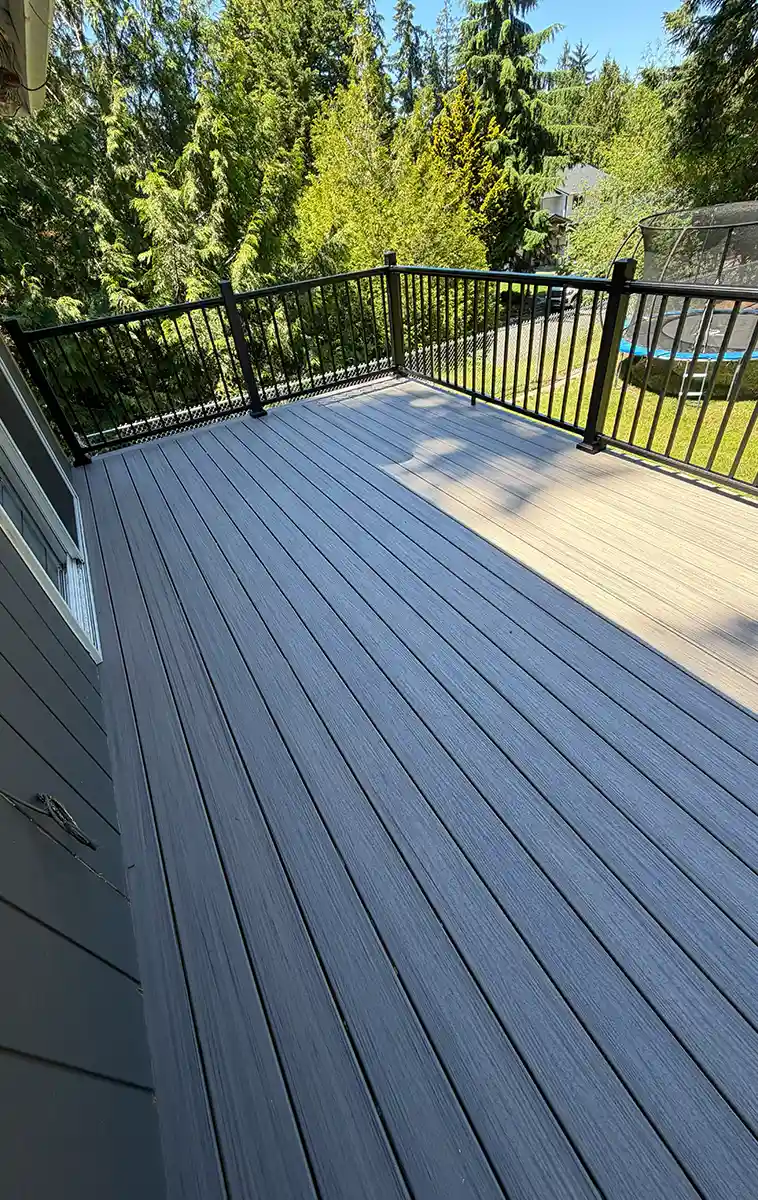
Composite decking blends wood fibers and plastics, often with a protective shell. It doesn’t need staining and resists rot, splinters and insects.
- Pros: minimal maintenance, consistent color, long life
- Cons: higher upfront cost, can get hot in direct sun, and still needs occasional washing
The frame matters most
Whatever you walk on, the framing underneath determines how long a deck lasts. Proper flashing where the deck meets the house, ground-contact-rated lumber, joist protection tape and good drainage are what keep a deck sound through years of rain.
Choose decking for how it looks and how much upkeep you want. Choose the builder for what’s underneath.
ELV Renovations
Do you need a permit for a deck in Redmond?
According to the City of Redmond, decks require a building permit unless they are detached, no more than 30 inches above adjacent grade, and not over a basement or story below. Most decks attached to a house need one. Read more in our Redmond permit guide.
Our recommendation
For most Redmond families who want to enjoy the deck rather than maintain it, composite is the better long-term value. If you love the character of real wood and don’t mind seasonal upkeep, cedar is a beautiful choice.
See finished outdoor projects in our portfolio, or contact us to plan your deck.